Ticket Price
Free
National District Attorneys Association (NDAA)
View AgencyFounded in 1950, the National District Attorneys Association (NDAA) is a national, non-partisan, non-profit membership association that provides training, technical assistance, and services to prosecutors around the country in support of the prosecution profession. Proudly supporting over 6,000 members nationwide, NDAA represents state and local prosecutors’ offices in rural, urban and suburban jurisdictions. NDAA serves as a nationwide, interdisciplinary resource center for research, training, knowledge building, and accountability as it works to promote the fair administration of justice. Governed by a Board of Directors made up of appointees chosen by states’ prosecuting associations and current and past NDAA officers, our executive leadership, staff, and board members routinely provide expert policy advice, data, and testimony to the United States Congress and the Executive Branch on a wide variety of criminal justice issues. NDAA also provides amicus curiae briefs to the United States Supreme Court on decisions that impact the work of prosecutors throughout the country to maintain a high standard of ethics and professional responsibility. As the leading source of national expertise on the prosecution function, NDAA is a valuable resource not for our members, but also for the media, academia, government, and the communities our members serve.
Message OrganiserAbusive Head Trauma 101: Foundational Context for Medical, Investigative, and Legal Practice
Event Overview
Join us on May 5, 2026, for the first session in a collaborative webinar series between the National District Attorneys Association (NDAA) and the National Center on Shaken Baby Syndrome (NCSBS).
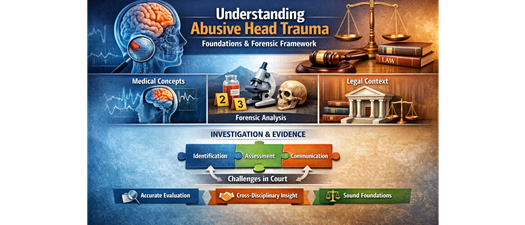
This session is designed to establish a common foundational framework for understanding abusive head trauma before engaging in case law–specific analysis. Presenters will walk through the core concepts and terminology associated with AHT, offering high-level insight into the medical and forensic issues most commonly encountered in these cases. The discussion would place medical findings within the broader investigative and prosecutorial context, focusing on how such findings are identified, assessed, communicated, and—critically—challenged in legal proceedings.
By grounding participants in how AHT cases are developed across disciplines, this session aims to reduce the risk of misinterpretation or overstatement when medical evidence is later evaluated for admissibility, reliability, or courtroom presentation. The intended outcome is that participants leave with a clear, shared understanding of how AHT is identified and addressed in professional practice, creating a solid foundation for the more nuanced legal analysis to follow in Part Two.